Why Is Côte d'Ivoire Called Côte d'Ivoire?
By Nicka·
Here is a question many children ask when they first see the name on a map:
"If Côte d'Ivoire means Ivory Coast, why does a country have a name connected with ivory?"
It is a great question. Country names often carry traces of the past. Some come from a river, a mountain, an old kingdom, or a word in a local language. Others come from old maps, trade, or the languages of people who arrived from far away.
To understand the name Côte d'Ivoire, we need to look at the coast, at trade, and at the many people who lived in this land long before the name existed.
What Does Côte d'Ivoire Mean?
Côte d'Ivoire is French.
Côte means "coast." D' means "of." Ivoire means "ivory."
So Côte d'Ivoire means "Coast of Ivory," or, as it is usually said in English, "Ivory Coast."
Ivory is the hard, creamy white material that elephant tusks are made of.
A Name From the Coast
Beginning in the 1400s, sailors from Portugal traveled along the coast of West Africa by ship. Traders from other European countries, including France, later followed.
These sailors did not discover West Africa. The coast was already home to communities with their own names, languages, leaders, and trade networks.
As Europeans traded along the shore, they often called different stretches of the coastline by the goods they most wanted to buy there. For example:
- The Grain Coast, in present-day Liberia, was named after a spice called grains of paradise.
- The Gold Coast, in present-day Ghana, was named after gold.
- The Ivory Coast, the stretch of shore between them, was named after ivory.
These names described what European traders were looking for. They did not describe the people who lived there. They were also names for coastlines, not for countries. For a long time, Europeans knew mainly the shore.
Why Ivory?
To understand the name, follow the path from an animal to a word on a map:
- Elephants have long been part of the wildlife of this land.
- Elephants have tusks, and tusks are made of ivory.
- Ivory was highly valued in Europe, and it became one of the goods European traders sought along this coast.
- Over time, European maps and traders came to call this stretch of shore the Ivory Coast, or Côte d'Ivoire in French.
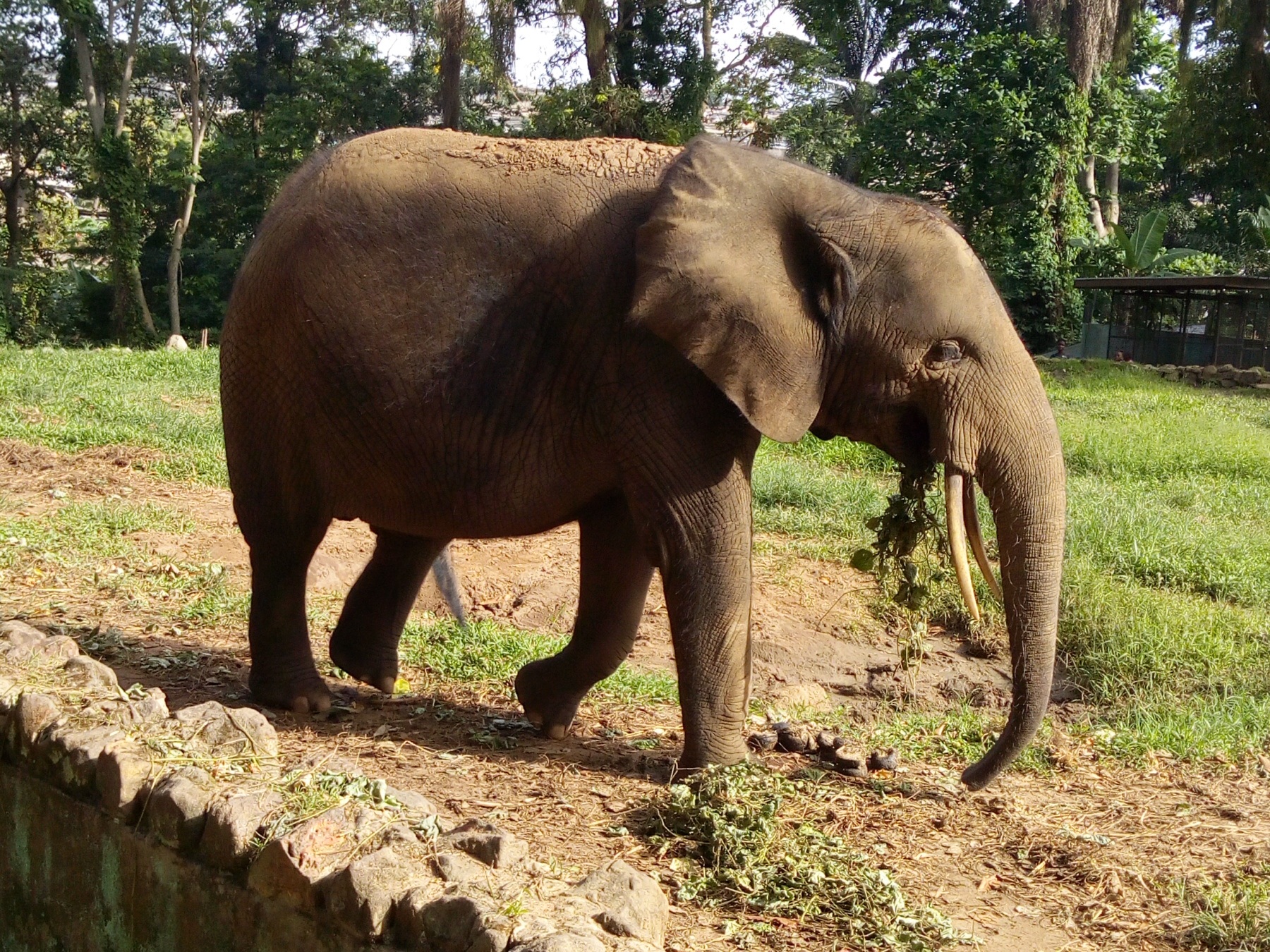
In Côte d'Ivoire today, official sources describe the elephant as the country's emblem and connect it with the country's name.
The full story is more complicated than a single word. Trade here was not easy for European ships. The shoreline had few sheltered harbors, so for a long time Europeans could not easily set up permanent trading posts, and their trade along this coast was irregular.
Ivory was not the only thing Europeans sought here. As along much of the West African coast, the trade also included enslaved African people. This is a painful part of history, and it is important to remember it honestly.
Before the Name
The name Côte d'Ivoire is only a few hundred years old. The history of the land is much older.
Archaeologists have found evidence that people lived here a very long time ago. Over many centuries, communities built villages and towns, chose leaders, spoke many languages, and traded with neighbors near and far.
In the north, for example, the town of Kong existed for several centuries and became an important center of trade and learning. Later, in the center of the country, Queen Abla Pokou and her followers founded the Baoulé kingdom.
These societies were shaped by African leaders, migrations, trade routes, and traditions, not by a name on a European map. Until the 1800s, Europeans stayed on the coast, and most people living inland had little contact with them.
Every community also had its own names for its towns, rivers, and lands, in its own language.
From a Coastal Name to a Country Name
For a long time, Côte d'Ivoire was simply a European name for part of the shoreline.
In the 1800s, France signed treaties with coastal leaders and built trading posts at places such as Assinie and Grand-Bassam. Later, French explorers and soldiers moved inland.
In 1893, France claimed the territory as a colony and called it Côte d'Ivoire. Its borders were drawn by European governments and stretched far beyond the coast, into forests and savannas a long way from the shore where the name began. Many communities resisted French rule.
In this way, a name that started as a label for a coastline became the name of a much larger territory.
On August 7, 1960, the country became independent. It kept the name Côte d'Ivoire, now as the name of a free nation.
Why We Say Côte d'Ivoire Today
In October 1985, Côte d'Ivoire decided that its name should no longer be treated as a geographic description to be translated into other languages. The country asked the United Nations and the rest of the world to say Côte d'Ivoire in every language.
That is why the United Nations, and many governments and organizations, use Côte d'Ivoire in English too, even though many people still say Ivory Coast.
Read next: Côte d'Ivoire or Ivory Coast? What Children Should Know (coming soon)
A Name Is Only the Beginning
A name can tell us something about history. It cannot tell us everything about a country or its people.
Côte d'Ivoire is home to many communities and languages, and to artistic traditions, foods, music, celebrations, and histories that no single word could hold. Its textile traditions alone show how varied the country is, from painted Korhogo cloth in the north to colorful Kita in the southeast.
In Discover Africa Through Its Prints: Côte d'Ivoire, children ages 8 and up explore ten of those cloth traditions, learn the stories connected with them, and color the designs themselves.
A name can tell us something about history. To understand a country, we have to keep looking beyond the name.
Sources
The information in this article was checked against the sources below. Web sources were consulted in October 2026.
- United Nations General Assembly. Note verbale dated 6 November 1985 from the Permanent Representative of Côte d'Ivoire to the United Nations addressed to the Secretary-General. Document A/40/860, 7 November 1985.
- Encyclopædia Britannica. "Côte d'Ivoire" (History sections); "What was Côte d'Ivoire formerly known as?"; "Grain Coast"; "Gold Coast."
- Library of Congress, Federal Research Division. Côte d'Ivoire: A Country Study, edited by Robert E. Handloff (research completed 1988; 3rd edition 1991).
- Ministère des Eaux et Forêts de Côte d'Ivoire. Communiqué "Présence d'éléphants dans la localité de Toulepleu," October 2020; and Atlas de la faune de Côte d'Ivoire, 2022.
- Agence Ivoirienne de Presse (AIP). Report on the adoption of the wildlife management and elephant protection bills by the National Assembly committee, April 24, 2024.
- Fraternité Matin. "Fête nationale de Côte d'Ivoire : Les 5 symboles de la République présentés aux citoyens," August 2020.